
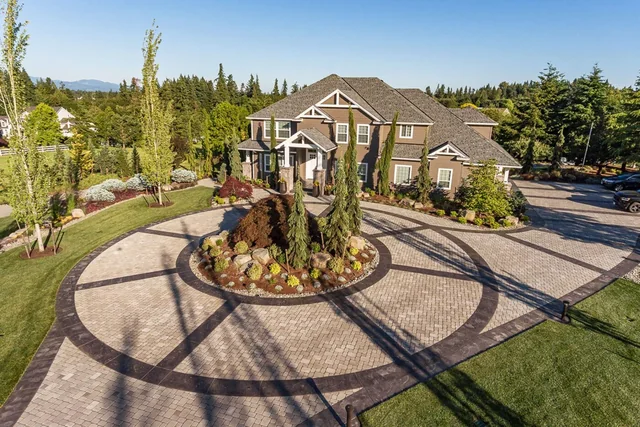
Every time something crosses a paver surface, the field pushes outward. Without restraint at the open edges, it slowly spreads.
What spreading looks like
Joints widen. The border row rotates. Grass creeps into the gaps. Within a few seasons the pattern near the edge no longer lines up with the middle, and there is no way to pull it back without lifting.
Where restraint is needed
Anywhere the field is not held by a wall, a curb, a step or a building — which on most driveways means both long sides, and on most patios means two or three sides.
How it should be installed
The restraint sits on the compacted base, not on soil, and it is spiked through into that base. Restraint laid on topsoil moves with the topsoil, which is the same as no restraint at all.
Soldier courses and borders
A border row does more than look deliberate: it gives the field a clean line to terminate against and makes cuts along the edge far less visible.
Read next
How deep should a paver base be in the GTA?
The single number that separates a patio that lasts from one that is relaid in five years.
ReadPolymeric sand: what it does and when it fails
Why the joints matter as much as the pavers, and the three mistakes that ruin a fresh install.
ReadWhat makes one interlock driveway cost twice another
Five variables that move the number, and only one of them is the stone you pick.
ReadFree estimate
Planning something like this?
Send the address and a photo, or call or text 647-621-8592.