
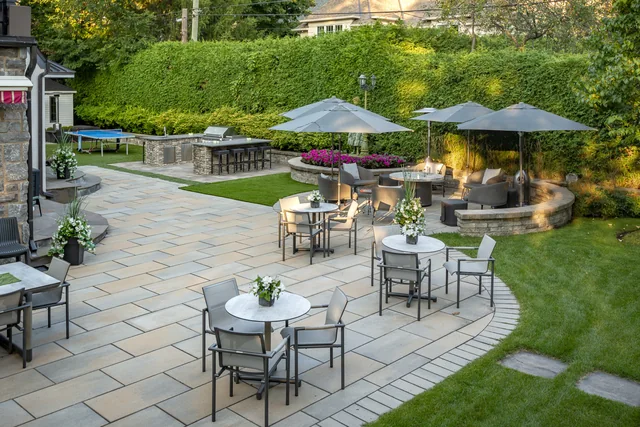
A yard on a grade is a yard nobody uses. There are two ways to fix that, and one of them is consistently better.
One tall wall
Holds more soil, costs more per square metre, often crosses the height where engineering becomes mandatory, and creates a single point of failure. It also looks like infrastructure.
Two low walls
Each holds less, both stay under the engineering threshold in most cases, and the bench between them becomes a planted terrace. The yard gains two usable levels instead of one retaining structure.
What the bench does
It breaks the visual mass, it gives roots somewhere to live, and it slows water moving down the slope. On a long grade that last point matters more than it sounds.
When one wall is still right
Where space is too tight for a bench, where you want a single flat area rather than two, or where the grade change is small enough that one low wall does the job.
Whichever you build, the drainage behind it is what decides whether it stays straight.
Read next
What goes behind a retaining wall, layer by layer
Clear stone, fabric, pipe and compacted backfill — and what happens when one is missing.
ReadGarden steps that people actually use safely
Riser height, tread depth, landings and the drainage detail everyone forgets.
ReadWall block or natural stone for a retaining wall?
Cost, look, height limits and how each one ages in this climate.
ReadFree estimate
Planning something like this?
Send the address and a photo, or call or text 647-621-8592.